OPEN-SOURCE AI SKILL · MIT
Make every slide
earn the swipe.
Turn raw expertise into evidence-led Instagram and LinkedIn carousels—with stronger hooks, real narrative progression and production-ready visual direction.
Plain Markdown. No runtime service. No API key required by the skill.
ANGLEEVIDENCENARRATIVEVISUAL SYSTEM
01 / THE PROBLEM
A cover is not a story.
The usual prompt writes eight variations of the same thought. This engine gives every page a distinct narrative job: evidence, mechanism, consequence, tension or action.
02 / SEE THE DIFFERENCE
Same topic.
Different editorial standard.
HOOK TOURNAMENTILLUSTRATIVE RUBRIC SCORES · NOT PERFORMANCE RESULTS
SELECTED ANGLE
Most AI carousels fail after the cover.
Specific failure point, credible promise and a deck that can repay the tension.
EDITORIAL SCORE4.7/5
- Clarity4.8
- Specificity4.7
- Tension4.6
- Payoff4.7
- Credibility4.7
A browser model of the 1–5 hook rubric. It evaluates editorial fit only and never promises reach, saves, leads or sales.

VS
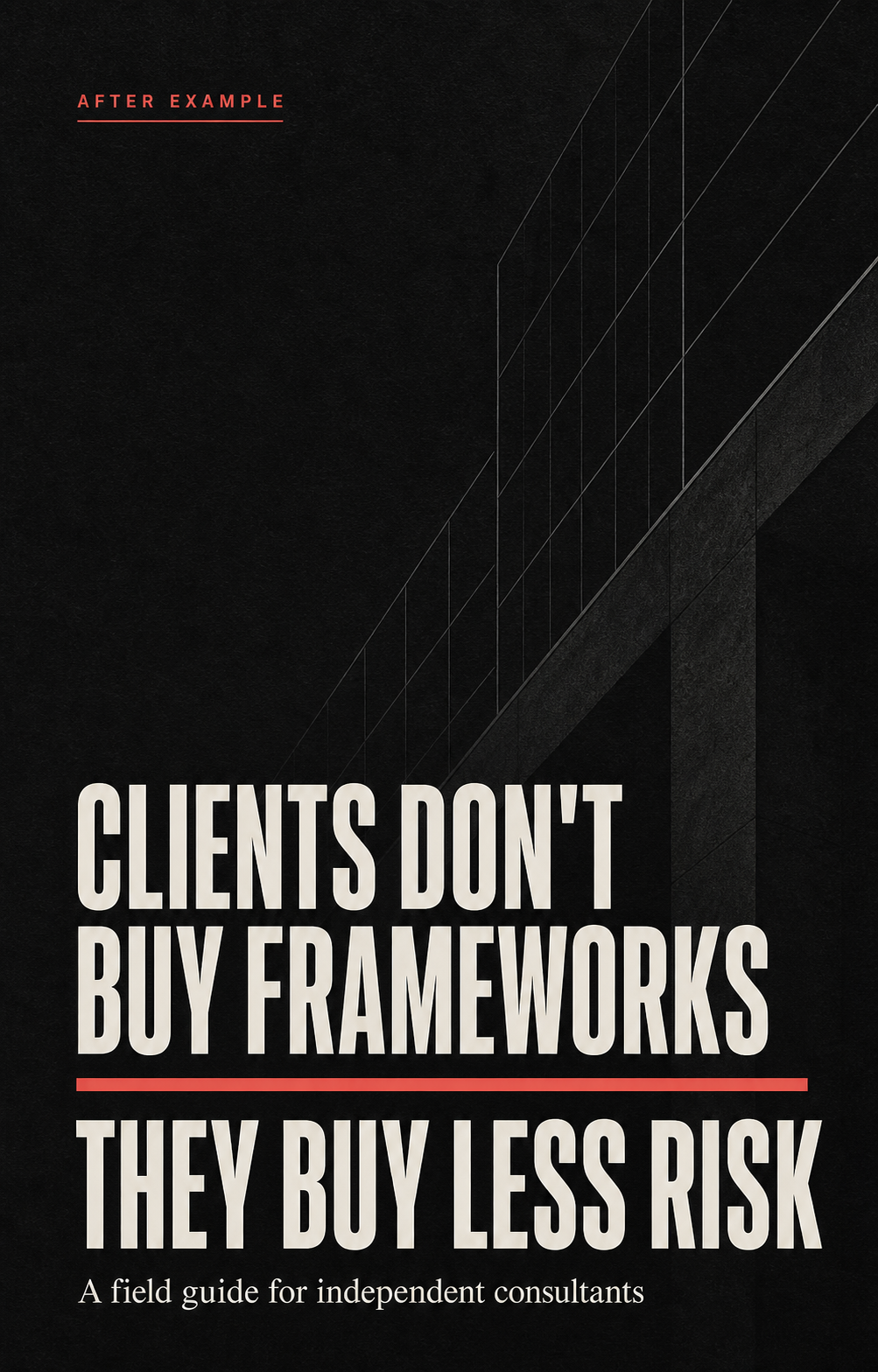
Example artwork generated with GPT Image 2. Layouts are original and not tied to a third-party brand.
03 / THE EDITORIAL PIPELINE
One prompt in.
A production brief out.
- 01
Verify the source
Separate reported facts, observations, theses and recommendations.
- 02
Frame the angle
Compare materially different hooks before selecting the strongest path.
- 03
Build the spine
Give every slide a reason to exist and create progression through the deck.
- 04
Direct the visuals
Specify components, placement, hierarchy, transitions and source notes.
- 05
Revise silently
Run skeptic, compression and production checks before delivery.
04 / WHAT YOU GET
More than slide copy.
Ranked hooks
Competing editorial angles, evaluated before the deck commits to one.
Slide architecture
Copy, narrative role, transition and intended reader movement per page.
Claim ledger
Evidence classes and source notes kept distinct from publishable copy.
Visual direction
Specific composition and hierarchy a designer or renderer can execute.
Caption + CTA
A caption that adds value and an action aligned with the real objective.
Structured JSON
A clean contract for renderers and automated production workflows.
05 / TESTED AS A SYSTEM
Editorial quality has a regression suite.
Six fresh-context cases cover reported facts, observed cases, commercial theses, repairs, changelogs and cultural stories. Scores measure rubric compliance—not reach, leads or sales.
Read the public results →6/6cases met release standard
9.0+average in every case
0critical failures in final runs
06 / HONEST ANSWERS
Will it guarantee virality?+
No. It improves the inputs you control: topic, evidence, hook, argument, design direction and CTA.
Does it require a paid API?+
The skill itself calls no service. The agent, research tools or image generator you choose may have their own costs.
Does it clone another creator?
No. It uses references to set a quality bar while preserving your own voice and visual identity.
YOUR EXPERTISE DESERVES AN EDITORIAL SYSTEM.